ODEEH Concept Store
Bikini Berlin, Berlin, Germany
2013 - 2014
Area:
250 m²
Status:
Completed
Client:
ottoundehrlich GmbH
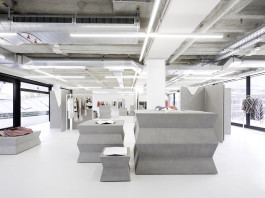
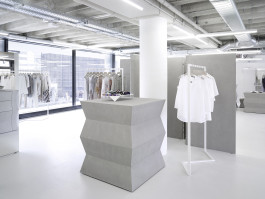
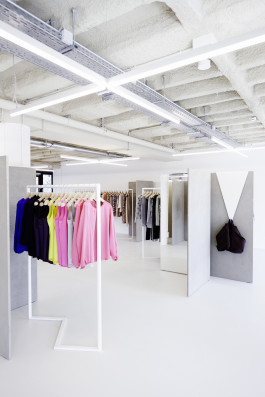
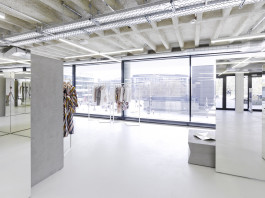
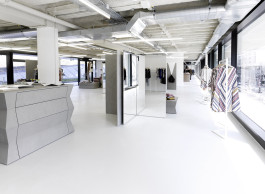
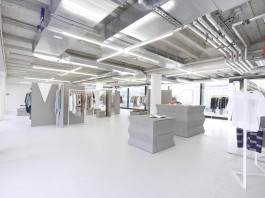
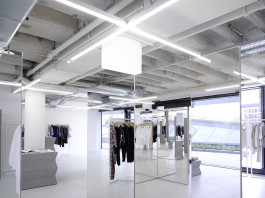
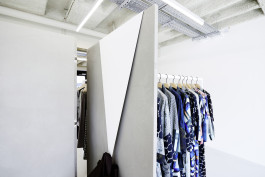
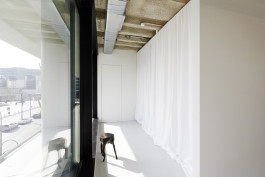
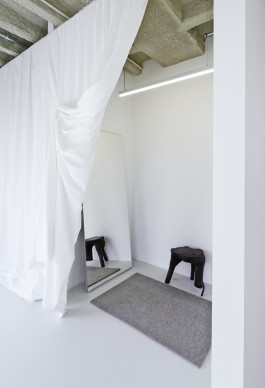
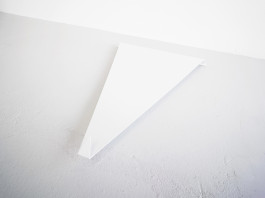
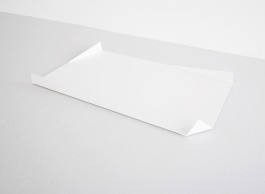
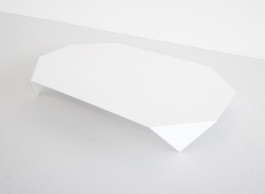
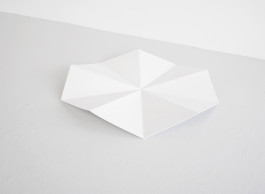
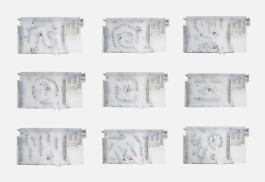
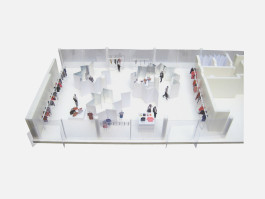
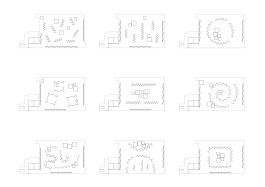
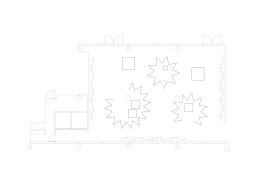
The store inhabits the terrace floor of BIKINI BERLIN, a modernist icon of 1950’s West-Berlin, offering vistas onto the Memorial church at Breitscheidplatz and the Berlin Zoo. A landscape of movable elements can be arranged in ever-changing configurations allowing for maximum flexibility in creating unexpected special formations and curated concepts. The modular system of paravents and podests made of raw cement board is complemented by a series of delicate metal objects such as clothes racks, hooks and trays, specially designed for the store.
The mirrored inner surfaces of the paravents create kaleidoscope-like interiors showing individual products at all facets and allowing customers to eyeball the clothes from multiple angles. The reappearing zigzag lines and the cross patterns of the lights refer loosely to stitching methods in tailoring.


Models:


Drawings:


Partners:
Christoph Zeller
Ingrid Moye
Project Team:
Omar Muñoz
Collaborators:
Local architect: Rundzwei, Andreas Reeg; project team: Christine Huber
Photography: Harry Weber
info@zellermoye.com / +49 30 33912436 / @zellerandmoye
info@zellermoye.com
+49 30 33912436
@zellerandmoye